
Public relations campaigns are the lifeblood of any organization aiming to build a strong brand identity and cultivate meaningful relationships with its stakeholders. From launching groundbreaking products to navigating challenging crises, effective PR strategies are essential for success. This guide delves into diverse examples, showcasing successful tactics and strategies across various sectors and demonstrating the power of strategic communication.
We’ll explore real-world case studies, analyzing the planning phases, target audiences, media utilization, and quantifiable results. We will also dissect different PR methods, such as press releases, influencer marketing, and social media engagement, highlighting their unique strengths and applications. By understanding these diverse approaches, you can gain valuable insights into crafting and executing impactful PR campaigns of your own.
Defining Public Relations Campaigns
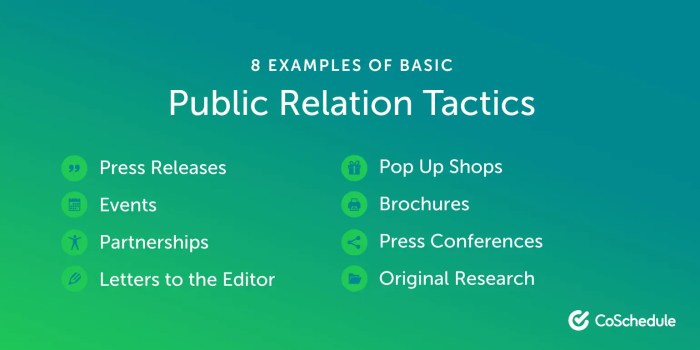
A public relations (PR) campaign is a strategic communication process designed to build and maintain a positive public image for an individual, organization, or brand. It involves a coordinated set of activities aimed at influencing public perception and achieving specific objectives, such as increasing brand awareness, managing a crisis, or launching a new product. Unlike advertising, which is a paid form of communication, PR relies on earned media—coverage secured through relationships with journalists and media outlets—as well as owned media (like a company website or social media channels) and shared media (user-generated content).Key Components of a Successful PR CampaignA successful PR campaign hinges on several crucial elements.
Effective planning and research are paramount, ensuring the campaign aligns with the organization’s overall goals and targets the right audience. A compelling message, clearly articulated and consistently delivered across all channels, is essential. This message must resonate with the target audience and accurately reflect the organization’s values and identity. Furthermore, a strong media relations strategy, involving building and nurturing relationships with journalists and influencers, is critical for securing positive media coverage.
Finally, meticulous monitoring and evaluation are necessary to assess the campaign’s effectiveness and make necessary adjustments throughout its lifecycle. Without consistent measurement, it’s impossible to determine the return on investment (ROI) and identify areas for improvement.
Types of Public Relations Campaigns
Public relations campaigns can be categorized into various types, each tailored to specific objectives. For example, a product launch campaign focuses on generating excitement and awareness around a new product or service. This might involve press releases, media kits, influencer outreach, and events. In contrast, a crisis management campaign aims to mitigate negative publicity and restore public trust following a damaging event.
This often requires rapid response, transparent communication, and a carefully crafted message addressing the situation. Brand awareness campaigns aim to increase the visibility and recognition of a brand or organization. These campaigns employ a variety of tactics, from social media marketing to public service announcements, to build a strong and positive brand image.
Stages in Planning and Executing a PR Campaign
The planning and execution of a PR campaign typically involve several key stages. The first is research and planning, which includes defining objectives, identifying target audiences, and conducting a thorough competitive analysis. Next comes the development of a communication strategy, outlining the key messages, target media outlets, and channels to be used. This stage involves creating press releases, media kits, social media content, and other materials.
The third stage is implementation, where the campaign is rolled out across the chosen channels. This involves coordinating with media outlets, managing social media engagement, and monitoring the campaign’s progress. Finally, evaluation assesses the campaign’s success against its stated objectives. This involves analyzing media coverage, social media engagement, and other relevant metrics to measure the campaign’s impact.
This data informs future campaigns and helps refine the organization’s overall communication strategy.
Successful Public Relations Campaign Examples
This section details several successful public relations campaigns across various sectors, highlighting the strategies employed and the results achieved. Analyzing these case studies provides valuable insights into effective PR practices. We’ll examine examples from product launches, crisis management, non-profit initiatives, and social media campaigns.
Product Launch Campaign: Dove’s “Real Beauty” Campaign
This campaign, launched in 2004, aimed to challenge conventional beauty standards and promote body positivity. The strategy involved a multi-faceted approach leveraging various media channels.
| Campaign Phase | Target Audience | Media Used | Results |
|---|---|---|---|
| Phase 1: Initial Awareness (TV Commercials and Print Ads) | Women aged 18-45 | Television commercials featuring diverse women, print advertisements in major magazines | Increased brand awareness and positive sentiment |
| Phase 2: Engagement (Website and Social Media) | Women aged 18-45, particularly active on social media | Interactive website, early social media engagement (forums, blogs) | Strong online community building, increased brand loyalty |
| Phase 3: Sustained Engagement (Ongoing Content & Partnerships) | Broader audience, including men and younger demographics | Continued social media presence, partnerships with relevant organizations, ongoing content creation (articles, videos) | Long-term brand association with body positivity, increased sales |
| Phase 4: Evolution (Addressing evolving social issues) | All demographics, increasingly diverse audiences | Continued social media presence, adapting to new platforms and trends, evolving messaging to address contemporary issues | Maintained relevance and positive brand image over time. |
Crisis Management Campaign: Tylenol’s Response to Product Tampering
In 1982, Tylenol faced a major crisis when several people died after consuming tampered-with capsules. Their response is a textbook example of effective crisis management.
| Crisis | PR Response | Media Coverage | Outcome |
|---|---|---|---|
| Several deaths linked to cyanide-laced Tylenol capsules. | Immediate product recall, transparent communication with the public, collaboration with law enforcement, introduction of tamper-resistant packaging. | Extensive media coverage, initially focusing on the deaths and the ensuing panic. Later, positive coverage highlighting Tylenol’s proactive response. | Although initially devastating, Tylenol regained consumer trust through its swift and responsible actions. The brand survived the crisis and remains a market leader. |
Non-Profit PR Campaign: The ALS Ice Bucket Challenge
The ALS Association’s Ice Bucket Challenge, launched in 2014, dramatically increased awareness and funding for amyotrophic lateral sclerosis (ALS) research.
The campaign’s success stemmed from its innovative approach and widespread social media participation.
- Objective: Raise awareness and funds for ALS research.
- Methods: Viral video challenge encouraging participants to dump a bucket of ice water over their heads and nominate others to do the same, generating significant social media buzz and donations.
- Impact: Dramatically increased donations to the ALS Association, raising millions of dollars and significantly increasing awareness of the disease.
Social Media PR Campaign: Old Spice’s “The Man Your Man Could Smell Like” Campaign
Old Spice leveraged YouTube and other social media platforms to create a highly successful and engaging campaign.
This campaign demonstrated the power of interactive, humorous content in building a strong online community and driving brand engagement.
- Platforms Used: YouTube, Twitter, Facebook
- Content Strategy: Humorous, personalized video responses to user comments, creating a sense of two-way communication and fostering a strong online community.
- Engagement Metrics: Millions of views on YouTube, significant increase in social media followers, substantial rise in brand awareness and sales.
Ultimately, mastering the art of public relations involves more than just disseminating information; it’s about building trust, fostering engagement, and shaping narratives. The examples explored in this guide underscore the importance of strategic planning, creative execution, and meticulous measurement. By understanding the nuances of PR, organizations can effectively manage their public image, navigate challenges, and achieve their communication goals with confidence and lasting impact.
Questions Often Asked
What is the difference between PR and marketing?
While both aim to enhance brand image, PR focuses on building relationships and managing reputation through earned media, while marketing uses paid media to promote products/services.
How long does it typically take to see results from a PR campaign?
Results vary greatly depending on campaign goals and strategies. Some campaigns yield immediate impact, while others require sustained effort over months to show significant returns.
What is the role of media monitoring in PR?
Media monitoring tracks mentions of your brand or organization across various media channels, enabling you to assess campaign effectiveness, identify emerging issues, and adjust strategies accordingly.
How can I measure the ROI of a PR campaign?
Measuring ROI requires defining clear objectives and tracking relevant KPIs such as media coverage, website traffic, social media engagement, and brand sentiment. Qualitative data, like improved brand perception, should also be considered.


