
Public relations (PR) is more than just press releases and media appearances; it’s the art and science of building and maintaining a positive relationship between an organization and its various publics. It involves strategic communication designed to shape perceptions, influence opinions, and ultimately achieve specific organizational goals. This nuanced field requires a deep understanding of human psychology, media landscapes, and ethical considerations, making it a dynamic and constantly evolving profession.
From crafting compelling narratives to managing crises, PR professionals play a pivotal role in shaping public perception. They work diligently to build trust, enhance brand reputation, and navigate the complexities of the modern information environment. This overview delves into the core principles of PR, exploring its key functions, tools, and impact across various sectors.
Defining Public Relations
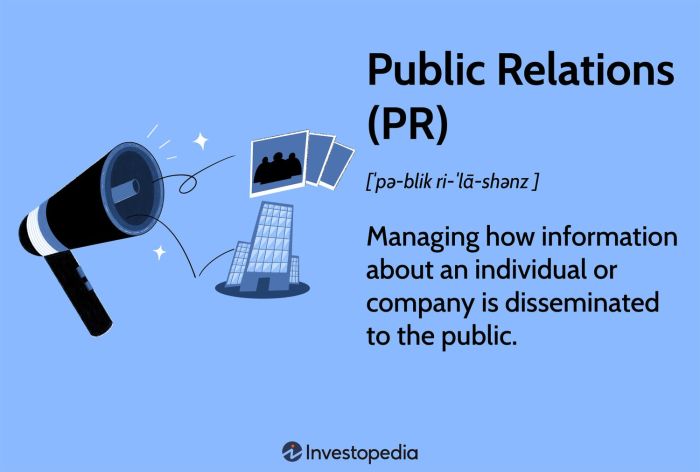
Public relations (PR) is a strategic communication process that builds mutually beneficial relationships between organizations and their publics. It involves managing and shaping perceptions, influencing opinions, and building trust to achieve specific organizational goals. Effective PR utilizes various communication channels to foster understanding and support.
Core Functions of Public Relations
The core functions of public relations are multifaceted and interconnected. They encompass a wide range of activities designed to manage an organization’s reputation and build strong relationships with its stakeholders. These functions typically include media relations (managing communication with journalists and media outlets), crisis communication (responding to negative events and protecting the organization’s reputation), internal communications (building relationships with employees), community relations (engaging with local communities), investor relations (communicating with shareholders and potential investors), and public affairs (engaging with government and regulatory bodies).
Each of these functions contributes to the overall goal of building a positive and sustainable image for the organization.
Public Relations versus Marketing
While both public relations and marketing aim to enhance an organization’s image and achieve business objectives, they differ significantly in their approach and strategies. Marketing primarily focuses on promoting and selling products or services to generate sales and revenue. It uses tools like advertising, promotions, and pricing strategies to directly influence consumer behavior. In contrast, PR focuses on building long-term relationships with various stakeholders, managing the organization’s reputation, and shaping public perception.
PR aims to build trust and credibility, indirectly influencing sales through positive brand perception rather than direct sales pitches. For example, a marketing campaign might focus on a new product launch with targeted advertising, while a PR campaign might focus on building brand awareness and positive media coverage around the company’s commitment to sustainability.
Public Relations versus Advertising
Public relations and advertising are often confused, but they are distinct communication disciplines. Advertising involves paid placements of messages in media channels to reach a specific target audience. The organization controls the message, its placement, and its timing. Public relations, however, focuses on earning media coverage and building relationships with media outlets to disseminate messages organically. PR professionals build credibility by securing positive media attention, which is often perceived as more trustworthy than paid advertising.
For instance, a company might use advertising to run a television commercial during the Super Bowl, while using PR to secure an interview with a prominent business journalist to discuss the company’s innovative technology. While both can be used together synergistically, their core functions remain different.
Ethical Considerations in Public Relations Practice
Ethical considerations are paramount in public relations. Maintaining transparency, accuracy, and fairness in communications is crucial for building and maintaining trust. PR professionals have a responsibility to act with integrity, avoid misleading information, and protect the confidentiality of their clients. Key ethical dilemmas include issues such as conflicts of interest, the use of misleading information, and the protection of privacy.
Adherence to professional codes of conduct, such as those established by organizations like the Public Relations Society of America (PRSA), is vital for ensuring ethical practice. Failure to uphold ethical standards can severely damage an organization’s reputation and lead to legal repercussions.
The Role of Public Relations in Building Reputation
Public relations (PR) plays a pivotal role in shaping and safeguarding a company’s reputation. It’s not merely about crisis management; it’s a proactive, strategic process of building and maintaining a positive brand image through consistent communication and relationship building with various stakeholders. Effective PR fosters trust, enhances credibility, and ultimately drives business success.Public relations helps build and maintain a positive brand reputation by strategically managing the flow of information between an organization and its publics.
This involves crafting compelling narratives, engaging with stakeholders through various channels, and addressing concerns promptly and transparently. A strong PR strategy anticipates potential challenges and proactively addresses them, preventing negative narratives from taking hold. Consistent messaging across all platforms ensures a unified brand identity and fosters public trust.
Successful Public Relations Campaigns that Enhanced Brand Image
Several successful PR campaigns have significantly improved brand image. For instance, Dove’s “Real Beauty” campaign challenged traditional beauty standards, resonating deeply with consumers and establishing Dove as a brand that champions self-acceptance and body positivity. This campaign utilized various media channels, including television commercials, social media engagement, and public events, to amplify its message and reach a wide audience.
Similarly, Patagonia’s commitment to environmental sustainability has become a core part of its brand identity, attracting environmentally conscious consumers and solidifying its reputation as a responsible and ethical company. Their consistent messaging across their products, website, and social media channels reinforces this image.
The Impact of Negative Publicity on a Company’s Reputation and How PR Can Mitigate It
Negative publicity can severely damage a company’s reputation, leading to loss of customers, decreased investor confidence, and even legal repercussions. A single negative event, such as a product recall or a public relations crisis, can quickly erode years of carefully built brand equity. However, effective PR can mitigate the damage by swiftly responding to negative news, communicating transparently with stakeholders, and taking responsibility for any wrongdoing.
This might involve issuing a public apology, initiating a product recall, or collaborating with media outlets to provide accurate information and address concerns. A proactive approach, which includes having a well-defined crisis communication plan, is crucial for minimizing the long-term impact of negative publicity.
A Hypothetical Public Relations Strategy for a New Product Launch
Imagine launching a revolutionary new smart home device. The PR strategy would involve a multi-faceted approach. Pre-launch activities could include generating buzz through targeted media outreach, influencer collaborations, and social media campaigns highlighting the device’s unique features and benefits. The launch event itself would be carefully planned, with invitations extended to key journalists, industry bloggers, and potential investors.
Post-launch, the PR efforts would focus on securing positive media coverage, monitoring online reviews, and addressing any customer concerns promptly. This continuous engagement helps to build trust and solidify the product’s position in the market. A strong emphasis on demonstrating the product’s value proposition through user testimonials and case studies would further enhance its credibility.
Case Study: Managing a Reputational Crisis
Consider a hypothetical scenario: A popular coffee chain is accused of using substandard ingredients. The initial response would involve swiftly acknowledging the issue, launching an internal investigation, and communicating transparently with the public about the findings. If the allegations are substantiated, the company would need to take immediate corrective action, such as removing the offending ingredient from its supply chain.
A public apology would be issued, expressing regret and outlining steps taken to prevent future incidents. The company would also engage with media outlets to provide accurate information and address any concerns. Throughout the crisis, consistent and transparent communication is key to rebuilding trust and mitigating reputational damage. The company might also engage in charitable activities or community initiatives to demonstrate its commitment to regaining public confidence.
Public Relations in Different Sectors
Public relations strategies are highly adaptable and vary significantly depending on the sector. The goals, audiences, and communication channels differ substantially between, for instance, a non-profit organization, a government agency, and a large corporation. Understanding these nuances is crucial for effective PR campaign development and execution. This section will explore the unique characteristics of PR across these diverse sectors.
Public Relations Strategies Across Sectors
The core function of public relations—building and maintaining positive relationships with key stakeholders—remains constant across sectors. However, the approach and tactics employed differ considerably. Non-profits often focus on building community support and securing donations, emphasizing emotional appeals and storytelling. Government agencies prioritize transparency and public trust, needing to navigate complex regulations and often manage public scrutiny. Corporations, meanwhile, concentrate on brand building, shareholder relations, and managing their corporate image, frequently employing sophisticated marketing and media strategies.
The challenges faced also vary greatly; non-profits grapple with limited resources, government agencies with bureaucratic hurdles, and corporations with potential negative publicity related to their products or practices.
Unique Challenges and Opportunities in Each Sector
Non-profit organizations face the challenge of securing funding and volunteers while maintaining public trust. Opportunities lie in leveraging emotional storytelling to connect with donors and highlighting the positive impact of their work. Government agencies must balance transparency with the need for security and often navigate complex political landscapes. Opportunities exist in building public trust through clear communication and demonstrating the effectiveness of government programs.
Corporations must manage their brand reputation while addressing ethical concerns and potential controversies. Opportunities arise from engaging customers through innovative marketing campaigns and demonstrating corporate social responsibility.
Examples of Successful Public Relations Campaigns
The ALS Ice Bucket Challenge is a prime example of a successful non-profit PR campaign. This viral social media campaign significantly increased awareness and donations for the ALS Association. In the government sector, the Centers for Disease Control and Prevention (CDC) effectively communicated crucial information during the COVID-19 pandemic, relying on clear, concise messaging and multi-platform outreach. In the corporate world, Patagonia’s commitment to environmental sustainability has resonated deeply with consumers, building brand loyalty and positive public perception.
This was achieved through consistent messaging, ethical practices, and engagement with environmental advocacy groups.
Public Relations in Crisis Communication
Crisis communication is critical across all sectors. For non-profits, a crisis might involve allegations of financial mismanagement. A swift, transparent response, showing a commitment to accountability, is essential. Government agencies might face crises involving natural disasters or public health emergencies. Effective communication during these events is vital for maintaining public order and trust.
For corporations, crises might stem from product recalls or ethical breaches. A proactive and empathetic approach, taking responsibility and demonstrating a commitment to rectifying the situation, is crucial for minimizing damage to reputation.
Public Relations Approaches: Non-Profit vs. Technology Company
The following bullet points illustrate contrasting PR approaches:
- Non-profit Organization: Focus on emotional storytelling, community engagement, volunteer recruitment, securing grants and donations, transparent financial reporting, building partnerships with other organizations.
- Technology Company: Focus on product launches, brand building, thought leadership, managing online reputation, engaging with tech influencers, crisis communication related to data breaches or product failures, showcasing innovation and technological advancements.
In conclusion, public relations is a multifaceted discipline demanding creativity, strategic thinking, and a keen understanding of human behavior. It’s a crucial function for organizations of all sizes, fostering positive relationships with stakeholders and navigating the ever-changing media landscape. By mastering the art of communication and leveraging diverse tools and techniques, PR professionals can effectively shape public perception, manage reputations, and ultimately drive organizational success.
The future of PR promises even greater integration of data analytics and technology, demanding adaptability and a commitment to continuous learning.
Questions and Answers
What’s the difference between PR and marketing?
While both aim to build brand awareness, marketing focuses on promoting products or services through paid channels, while PR builds relationships and influences public perception through earned media and other strategic communications.
How much does a PR professional earn?
Salary varies widely based on experience, location, and employer. Entry-level positions may offer lower salaries, while experienced professionals in larger agencies or corporations can command significantly higher incomes.
Is a degree required for a career in PR?
While not always mandatory, a degree in communications, journalism, or a related field is highly beneficial and often preferred by employers. Relevant experience and strong skills are also highly valued.
What are some common PR mistakes to avoid?
Common mistakes include ignoring negative feedback, failing to plan strategically, neglecting social media, and a lack of transparency in communications.


